The Shallows (2016)
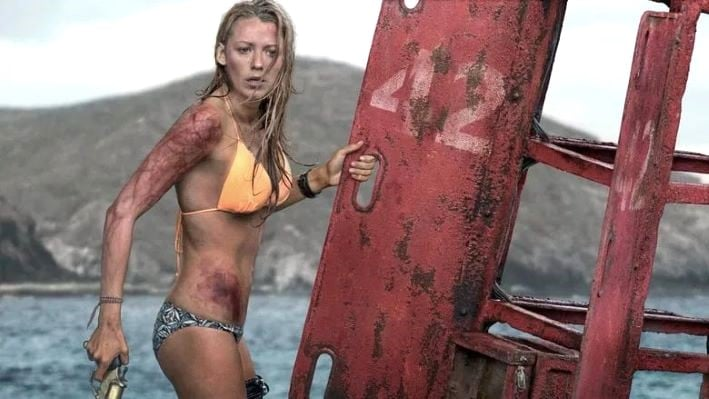
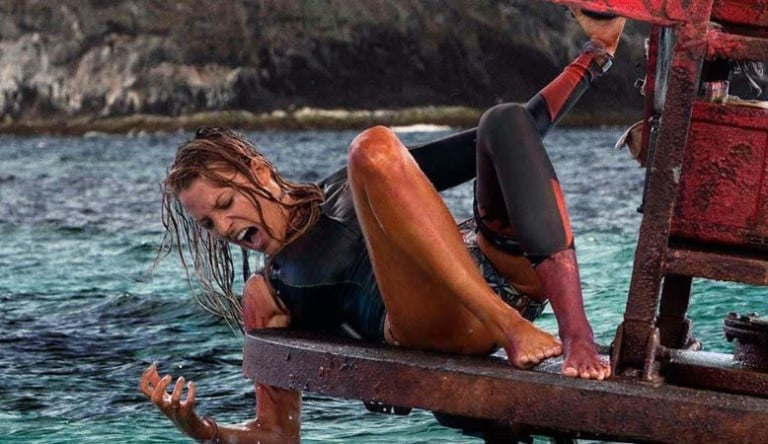
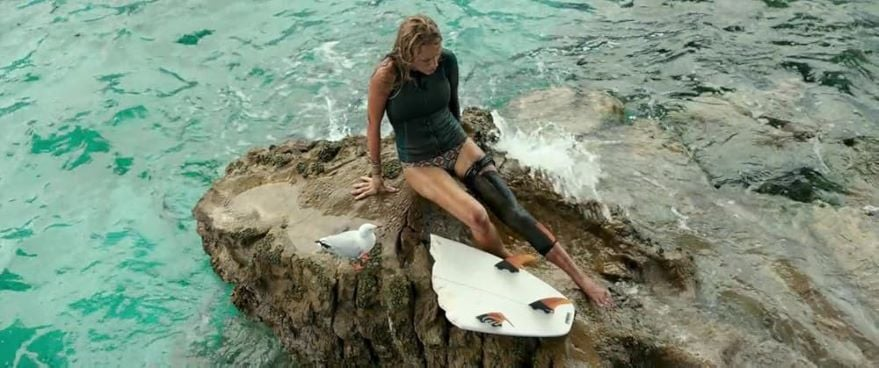
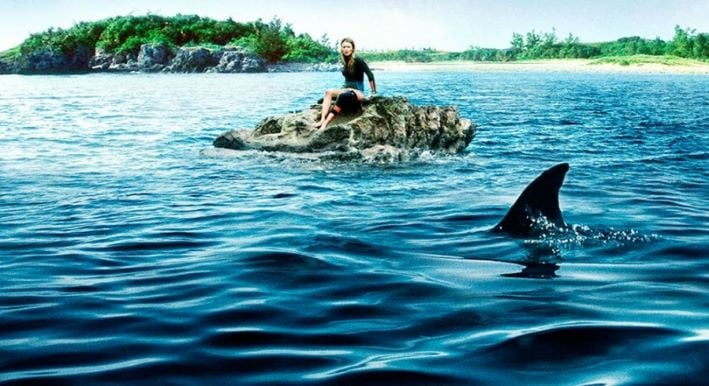
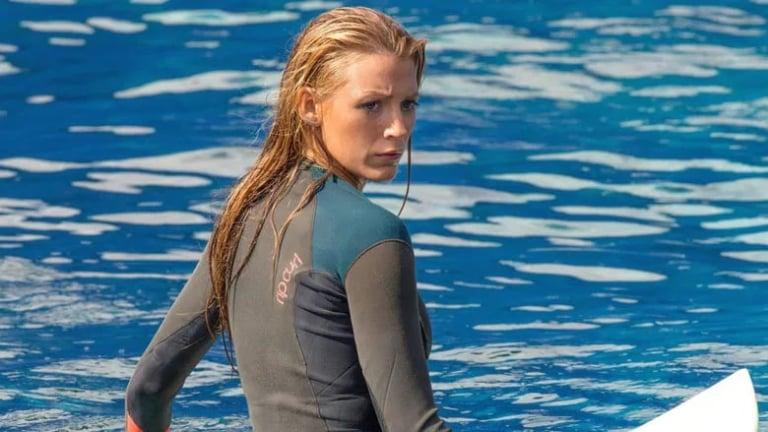
The Shallows is a 2016 American survival horror thriller film directed by Jaume Collet-Serra, written by Anthony Jaswinski and starring Blake Lively. In the film, medical student Nancy Adams gets stranded 200 yards (180 m) from shore and must use her wits and determination to survive a great white shark attack. Principal photography began in October 2015 in New South Wales and Queensland, Australia. The film was released in the United States on June 24, 2016, by Columbia Pictures. The film received generally positive reviews and grossed over $119 million against a production budget in the range of $13–17 million, becoming a box office success.
Plot:
Shortly after the death of her mother from cancer, medical student Nancy Adams travels to a secluded beach in Mexico, the same one her mother visited while she was pregnant with her. Carlos, a friendly local resident, gives her a ride and drops her off alone at the beach, as her friend who came along with her is staying back at their hotel, recovering from excessive partying.
Nancy joins two other locals and the three surf for several hours. Taking a break from surfing, she video-chats with her younger sister Chloe. When she talks to her father in an emotional and strained conversation, it is revealed that Nancy is a senior student but her mother’s recent death has caused her to consider dropping out of medical school before graduation.
Filming:
Principal photography began on October 28, 2015, in New South Wales, Australia. Filming also took place at Lord Howe Island, Mount Tamborine, Queensland and Village Roadshow Studios. It originally was going to be filmed on the Gulf Coast of the United States near Galveston, but the filmmakers were denied a film permit for safety reasons. Filming wrapped on January 15, 2016. Much of the film was shot in a tank using bluescreens for effects. Still, Collet-Serra wanted to avoid the “more stylized look” of similar films using the setup and estimated that 10% of the film was shot on location in order to “trick” the audience into believing the setting was real: he explains: